Heads up: some links are affiliate, so I may earn a tiny commission (at no extra cost to you!) on stuff I genuinely adore. Please read my Disclosure Policy for additional information.
First things first: not having a defined waist is not a problem. It’s a body shape — specifically, it’s what most people mean when they say “rectangle” or “straight” figure. And like every body shape, it has a formula that works beautifully once you understand it.
The goal isn’t to fake a waist you don’t have. It’s to create the illusion of one through strategic silhouette, fabric, and styling choices that take about thirty seconds to learn and a lifetime to benefit from.
Here’s exactly what to do.
1. The Wrap Dress Is Your Starting Point
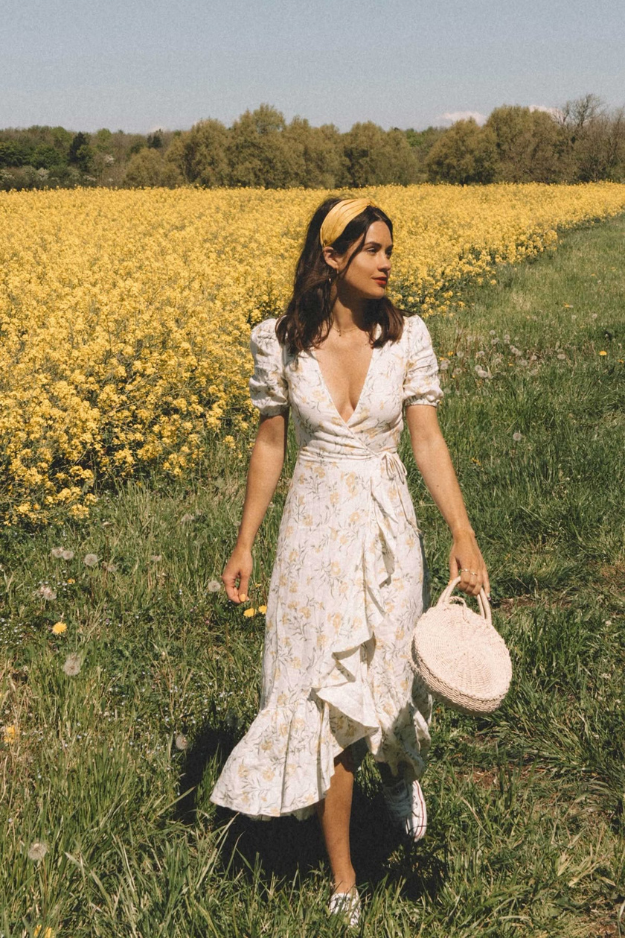
If you own one wrap dress that fits well, you own the single most effective waist-creating garment ever invented. The crossover construction pulls fabric toward the center of the body, creating a defined point at the waist that doesn’t require one to exist naturally. It works on every body type — but it works especially hard on straight figures.
Pro tip: Look for wrap dresses with a fixed front rather than a tie. A fixed wrap stays exactly where it’s supposed to all day. A tie version shifts, loosens, and requires constant readjusting. Fixed front, always.
2. Tuck Everything In — At Least Partially
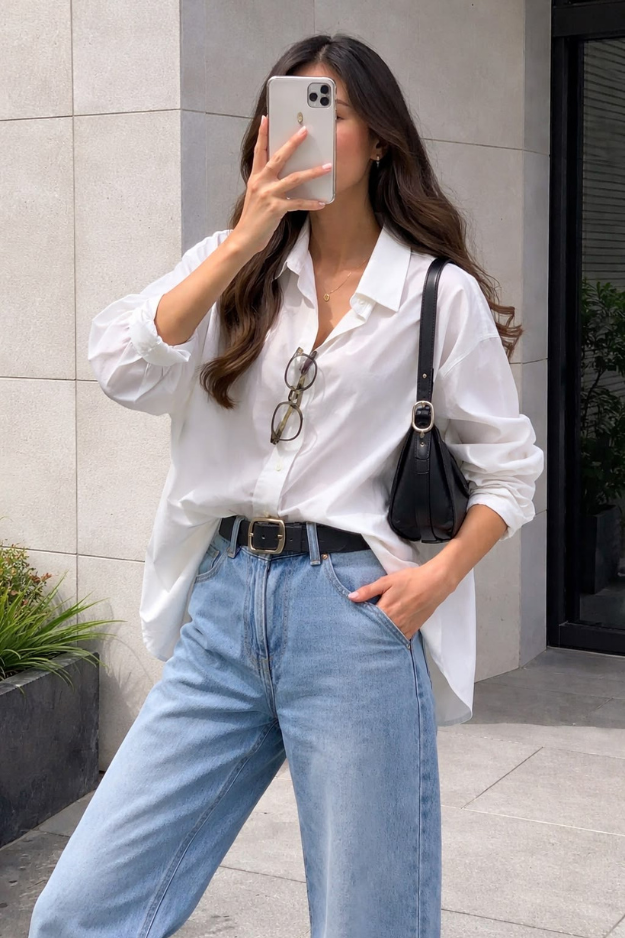
The front tuck is the fastest, cheapest waist-creating move available. Tucking even just the front of a blouse into a high-waisted skirt or trouser immediately breaks the straight line of the body, creates a visual waist, and adds proportion that a fully untucked top simply can’t deliver. It takes five seconds and costs nothing.
Pro tip: A full tuck creates a clean, polished look. A partial front tuck — just the front hem tucked in, the back left out — looks more relaxed and works for casual settings. Both create waist definition. Pick the one that suits the occasion.
3. Wear High-Waisted Everything
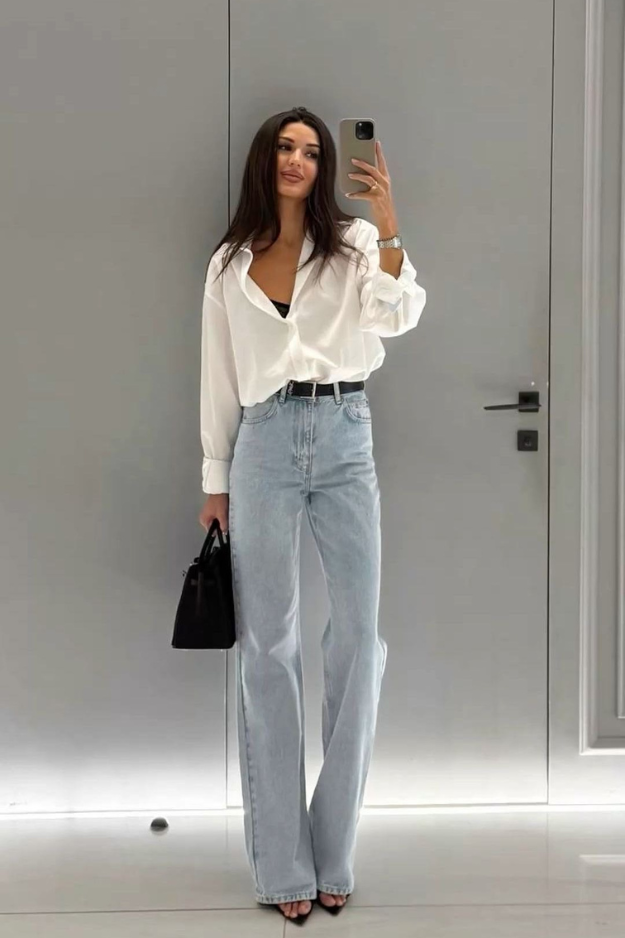
Low-rise and mid-rise waistbands sit below the natural waist and offer no definition. A high-rise waistband — on jeans, trousers, skirts, shorts — sits at the narrowest point of the torso and does the visual work of creating a waist even when the body doesn’t naturally taper there. This is the single most impactful fit choice for a straight figure.
Pro tip: Pair high-waisted bottoms with a top tucked in or cropped just enough to show the waistband. If the waistband is hidden under a long, loose top, it can’t do its job.
4. Add a Belt — Even When the Outfit Doesn’t “Need” One
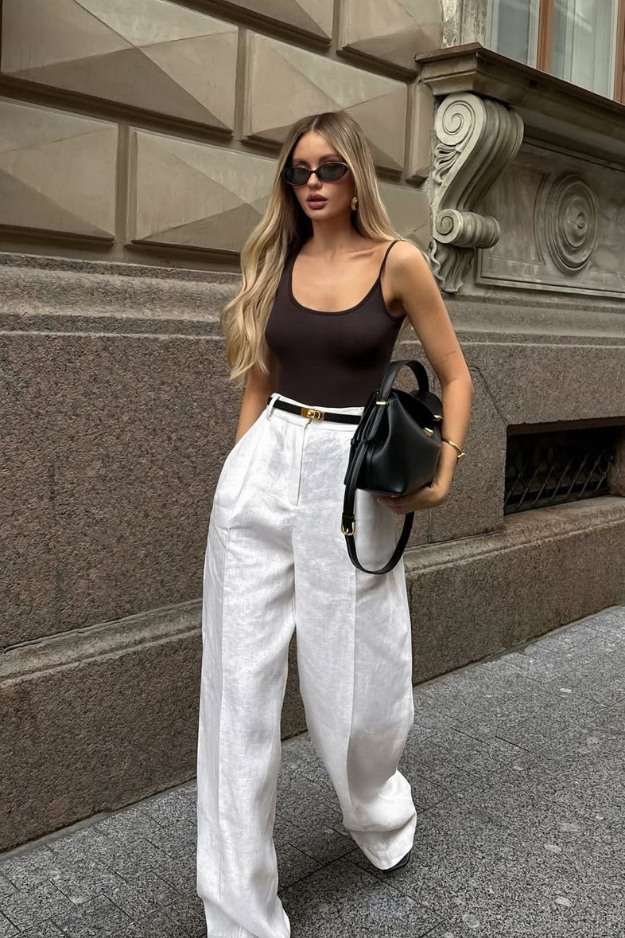
A belt worn at the natural waist on an otherwise shapeless outfit is the most direct way to create a waist that doesn’t exist. It draws a line across the narrowest part of the torso, creates an immediate before-and-after effect, and signals intention. A dress, a blazer, an oversized shirt — all of them become more defined the moment a belt is added.
The specific belts that work best: A slim leather belt in a matching or tonal color disappears into the look while creating definition. A wide belt makes more of a statement and creates more dramatic shape. Both work — choose based on how much structure you want the outfit to have.
Pro tip: Avoid contrast belts that strongly clash with both your top and bottom. A contrasting belt places a very visible horizontal line across the midsection, which can emphasize width rather than creating shape. Match or closely coordinate the belt to at least one element of the outfit.
5. A-Line and Fit-and-Flare Silhouettes Do the Work For You
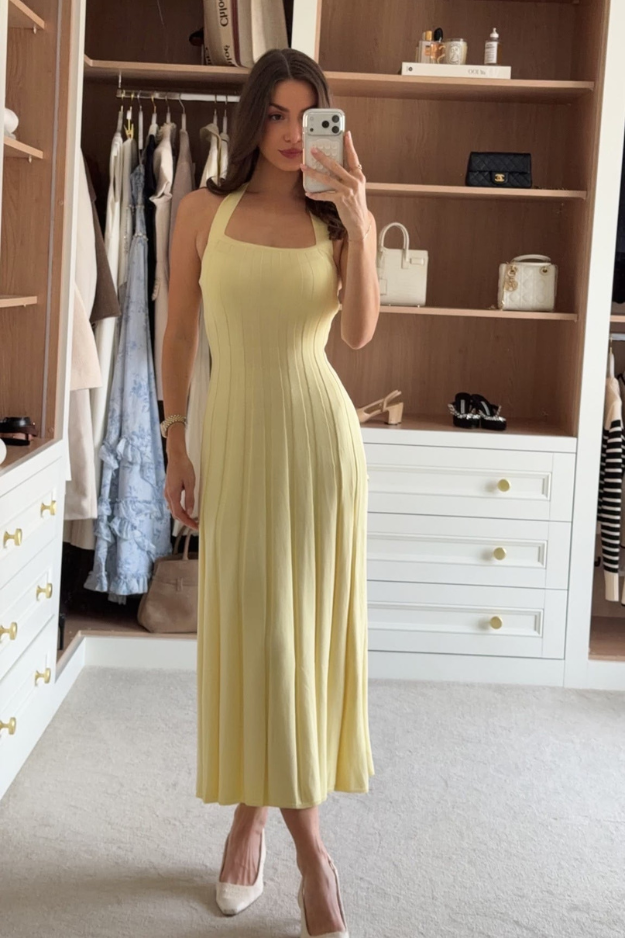
These silhouettes are specifically designed to create the impression of a waist. Fitted through the bodice, flaring below the hip — the contrast between the fitted top and the fuller skirt creates shape automatically, no natural waist required. An A-line dress or skirt on a straight figure is one of the most effortlessly flattering combinations available.
Pro tip: The more defined the fit through the bodice, the more dramatic the waist illusion. A slightly structured bodice — not skin-tight, just fitted — amplifies the A-line effect significantly more than a loose or boxy top half.
6. Choose Fabrics That Drape and Cling Slightly
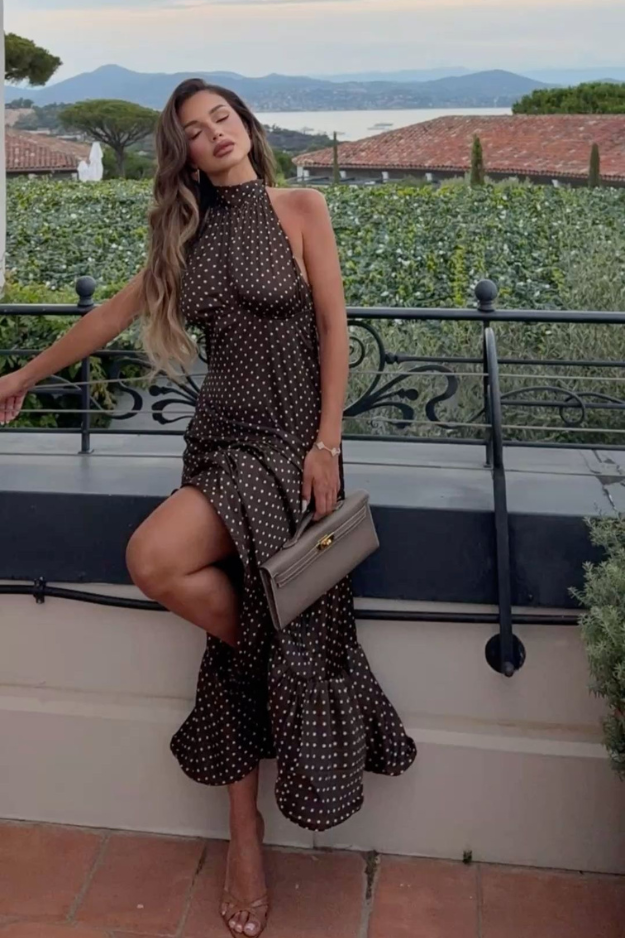
Very stiff, structured fabrics hold away from the body and hide any natural shape. Very clingy fabrics show everything. The sweet spot for a straight figure is fabrics that drape — crepe, matte jersey, silk blends, ponte — that follow the body’s natural contours without gripping. These fabrics create shape through movement and drape in a way that stiff fabrics simply can’t.
Pro tip: Avoid very stiff fabrics like thick denim, structured neoprene, or heavy canvas as tops or dresses. These materials create a boxy, rigid silhouette that adds to the straight shape rather than softening it.
7. Peplum Tops and Ruffled Hems Are Made for You
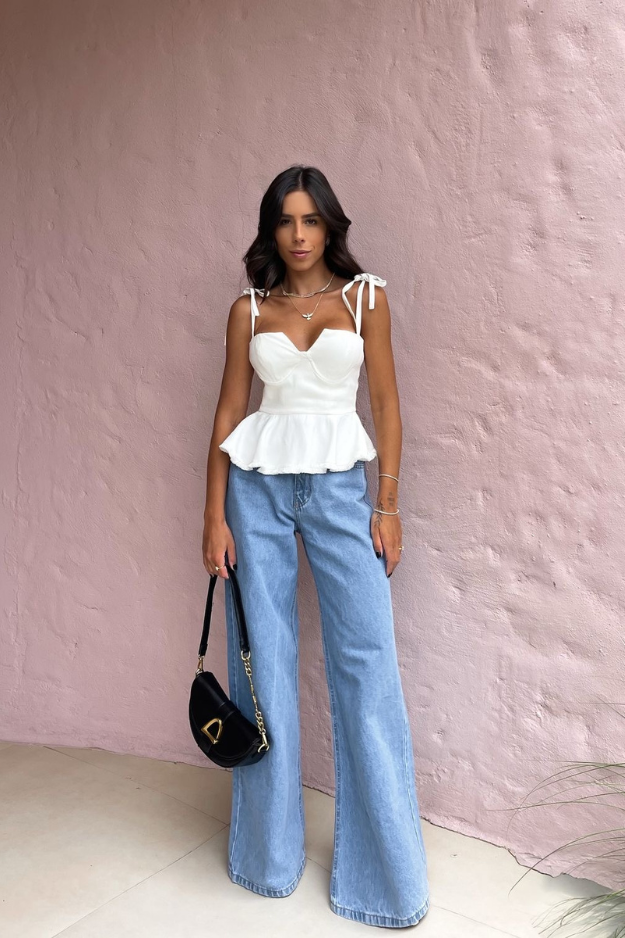
A peplum — the small flared ruffle that sits at the waist of a top or dress — is specifically designed to create the illusion of a waist and hip curve. It adds volume at the hip and pinches visually at the waist, which is exactly the shape a straight figure is working toward.
Same logic applies to tops with a slight flare at the hem — they create hip definition where there isn’t any.
Pro tip: A peplum works best in a structured fabric that holds the flare. A peplum in a very floppy, drapey fabric loses the shape-creating effect entirely. Look for a peplum with some body to it.
8. Vertical Details Through the Bodice
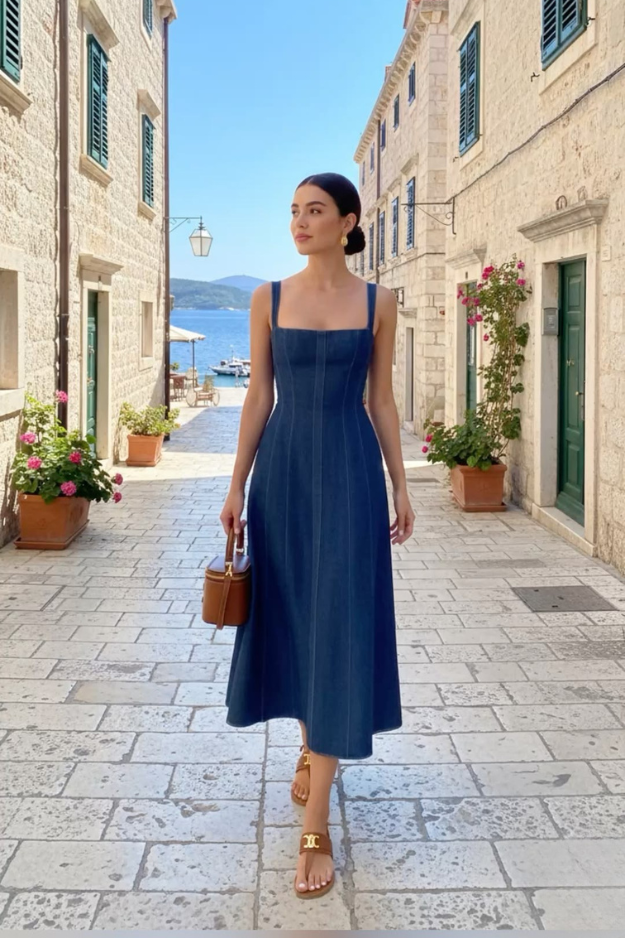
Vertical seaming, a button placket down the center, a ruched panel, or a deep V-neck all draw the eye down the center of the body rather than across it. This creates the visual impression of length and narrowness through the torso — both of which contribute to the appearance of a more defined waist.
Pro tip: A deep V-neck is one of the most effective waist-creating necklines because it creates a long vertical line from chin to chest, narrows the visual width of the torso, and draws the eye inward toward the center of the body.
9. Use Color Blocking Strategically
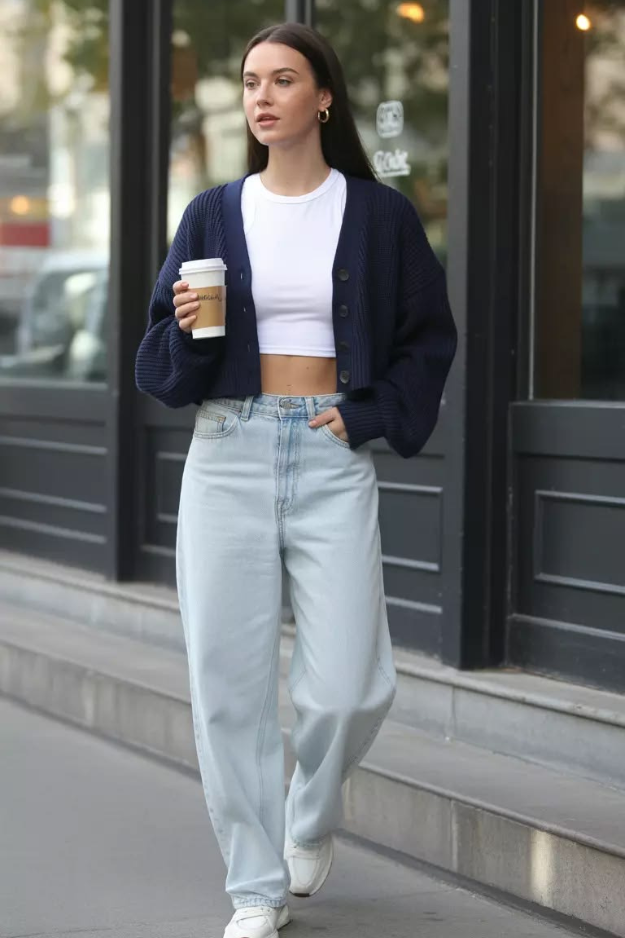
Wearing a darker color at the sides of the torso and a lighter color down the center creates an optical slimming and narrowing effect — the dark sides recede visually, the lighter center advances, and the result is a more defined waist. This is how so many “slimming” dresses actually work — it’s color placement, not magic.
Pro tip: You don’t need a purpose-built colorblock dress to use this technique. A dark cardigan worn open over a lighter top creates the same effect — dark panels at the side, lighter color down the center.
10. Ruching Is Your Best Friend
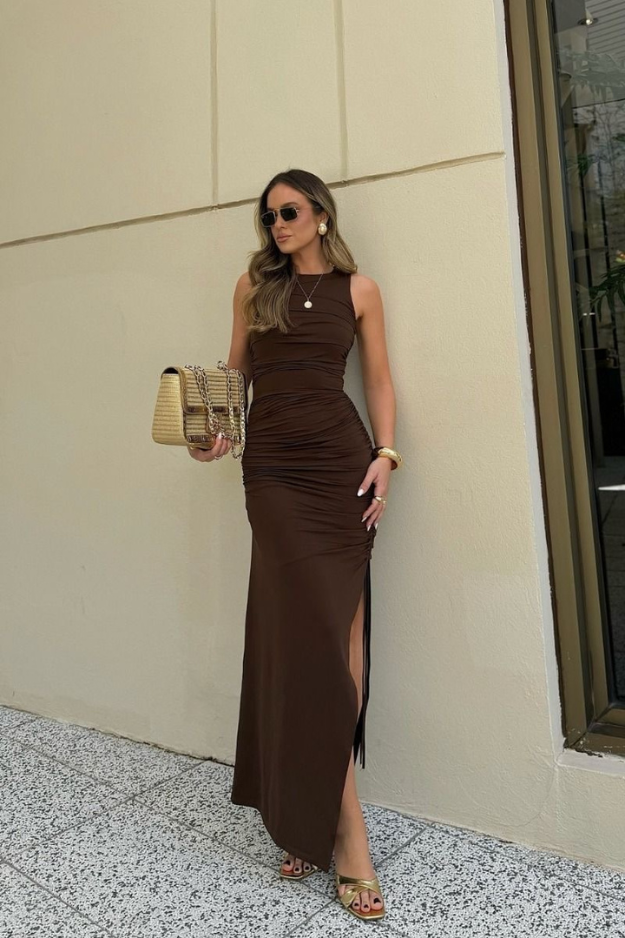
Gathered, ruched fabric at the waist area draws the eye, creates visual texture, and disguises the straight line of the torso simultaneously. A ruched dress or a top with waist ruching does two things at once: it creates visual interest at the midsection and uses the gathered fabric to suggest shape rather than reveal the absence of it.
Pro tip: Look for ruching that runs horizontally across the midsection or gathers toward a central point at the waist. Ruching that runs vertically elongates rather than shapes — useful for height, less useful for waist definition.
11. Avoid Boxy, Shapeless, Head-to-Toe Layers
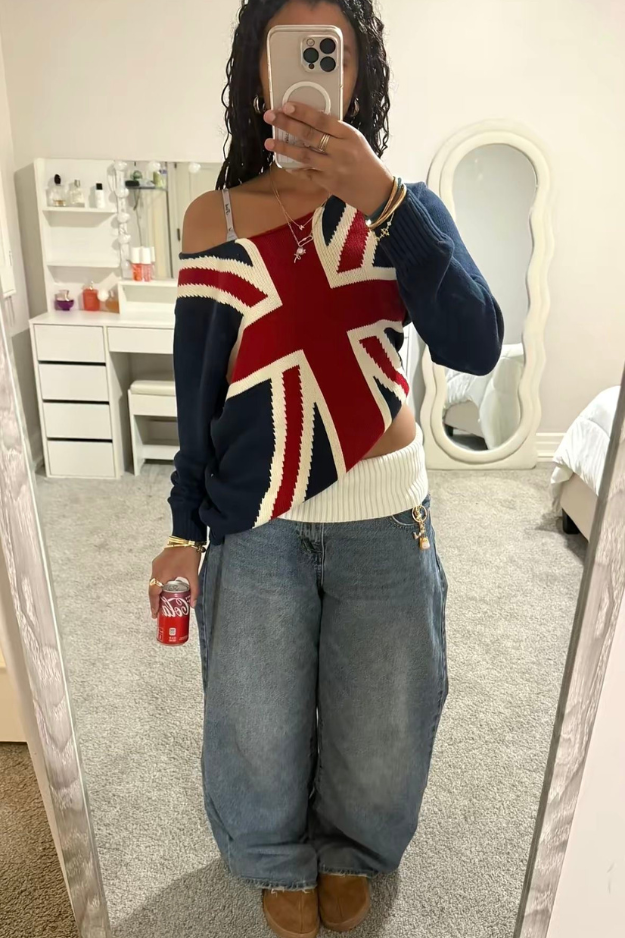
The layering trap for straight figures is piling on oversized, shapeless pieces without any fitted element to anchor the look. A boxy cardigan over a loose tee over wide-leg trousers is a silhouette with no shape at any point — and no natural waist to interrupt the flow. The layers work against you rather than for you.
The fix: If you love layering, always include one fitted or structured piece in the equation. A blazer with defined shoulders over a looser outfit. A fitted turtleneck under an oversized coat. The structure of one piece creates enough contrast to give the whole look shape.
Pro tip: A structured blazer is the most reliable layering piece for a straight figure because it has defined shoulders, a button point that creates a waist when closed, and a hem that creates hip definition below. It does more waist work than almost any other single garment.
related articles to How to Dress When You Have No Waist
- How to Dress Simple but Stylish: 15 Fashion Tips That’ll Change Your Life!
- How to Look High-Maintenance (Without the High-Maintenance Effort)
- How to Look Expensive Without Trying (Think Effortless Old-Money Energy)
- 33 Easy Hacks on How to Look Pretty Effortlessly Everyday and Feel Fabulous!