
Heads up: some links are affiliate, so I may earn a tiny commission (at no extra cost to you!) on stuff I genuinely adore. Please read my Disclosure Policy for additional information.
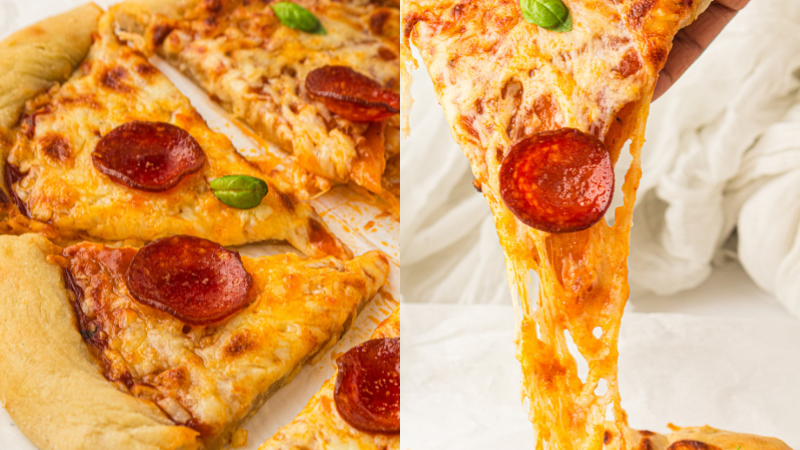
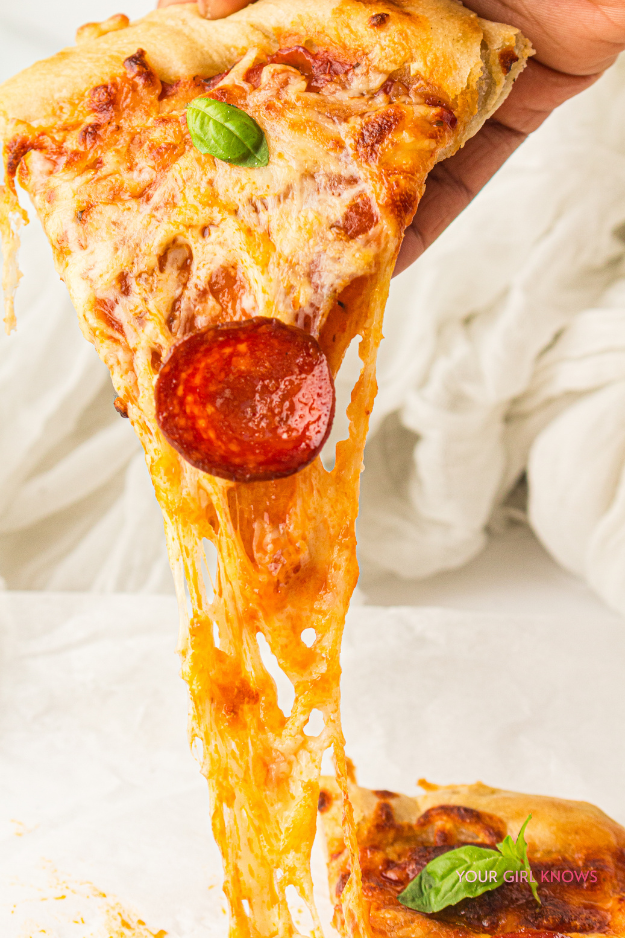
This is the pizza dough that ruins all other pizza dough for you. Chewy, slightly crisp, with a flavor that commercial yeast just can’t replicate — the slow fermentation does things to this dough that are genuinely difficult to explain until you taste it.
A little patience, a very hot oven, and you’ve got two pizzas that taste better than most places you’d pay for it.
Why You’ll Love This Recipe
- That sourdough crust — Complex, slightly tangy, chewy in the center and crisp at the edges. It tastes like a proper pizzeria crust, not a homemade one.
- Overnight fermentation option — The longer this dough ferments, the better it tastes. Make it the night before and the flavor develops into something special.
- Makes two pizzas — One for tonight, one to freeze for later. Or two for tonight. No judgment.
- Minimal hands-on time — 15 minutes of prep and then time does the work. The dough handles itself.
- Incredibly versatile — Classic margherita, barbecue chicken, Mediterranean, white pizza — this dough works with everything.
- Freezer-friendly dough — Make a double batch, freeze the extra dough balls, and have ready-to-go pizza dough whenever you want it.
Ingredients
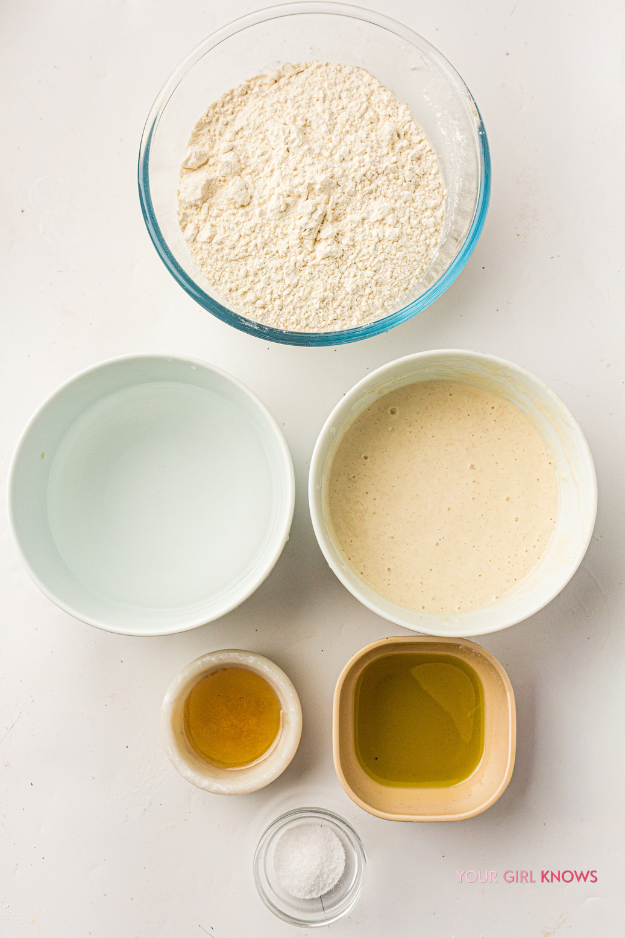
- 1 cup active sourdough starter (240g), bubbly and doubled
- ¾ cup warm water (180g)
- 2 tablespoons olive oil
- 1 teaspoon honey (optional, helps browning)
- 3 cups bread flour (375g)
- 1½ teaspoons fine sea salt
For Topping (suggestions)
- Pizza sauce or crushed tomatoes
- Fresh or shredded mozzarella
- Toppings of your choice
Step-by-Step Instructions for sourdough pizza
Step 1: Make the Dough
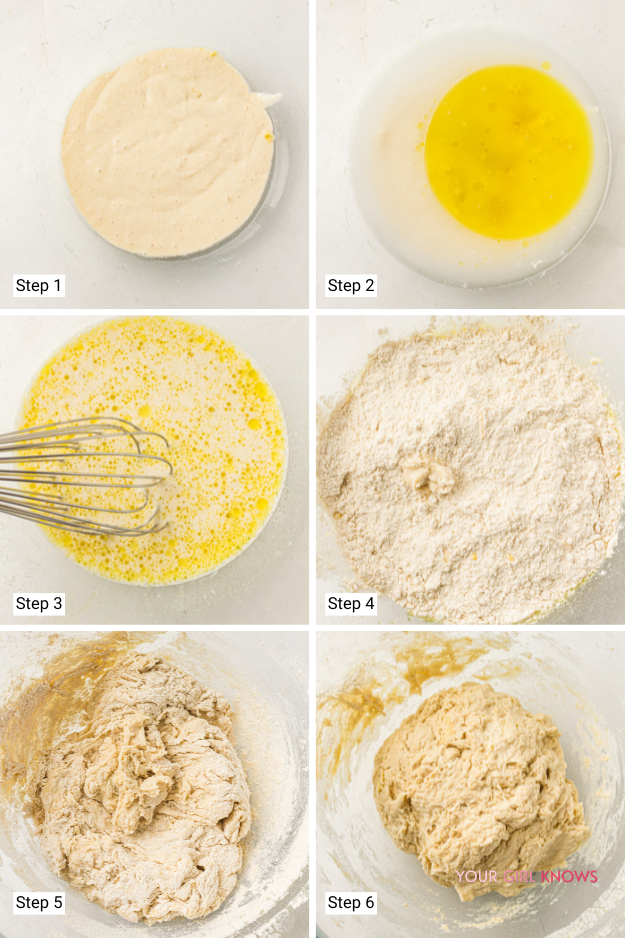
In a large bowl, stir together the sourdough starter, warm water, olive oil, and honey until combined. Add the flour and salt and mix until a shaggy, rough dough forms. It will look uneven at this stage — that’s fine.
Step 2: Knead
Turn the dough onto a lightly floured surface and knead for 8–10 minutes by hand until it becomes smooth, elastic, and slightly tacky but doesn’t stick to your hands. If using a stand mixer, use the dough hook on medium speed for about 6 minutes. The dough should stretch without tearing when pulled.
Step 3: First Rise
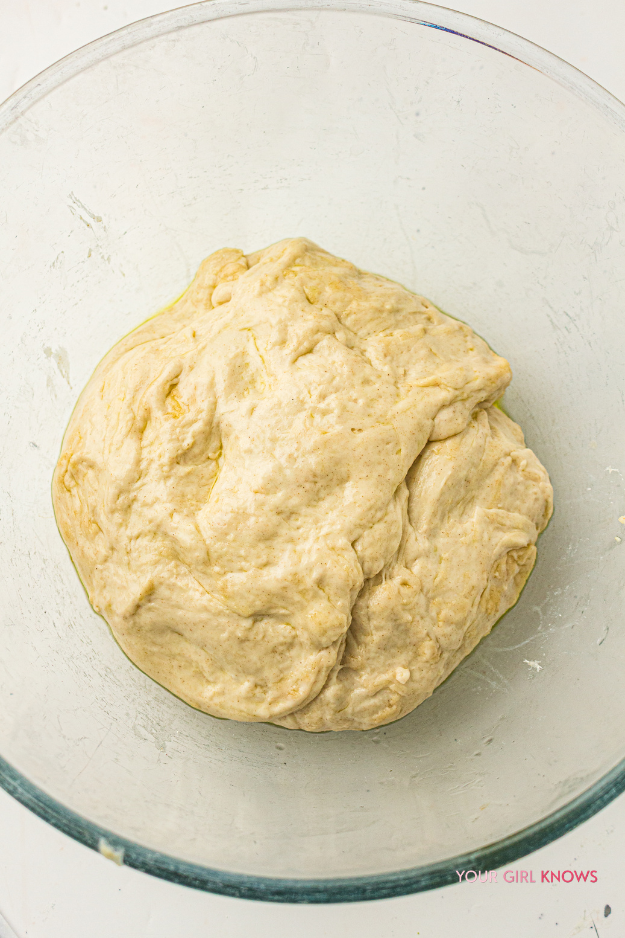
Place the dough in a lightly oiled bowl, cover, and let rise at room temperature for 4–6 hours until puffy and slightly increased in size. For significantly better flavor, refrigerate after the first hour and ferment overnight.
This cold, slow fermentation is what gives sourdough pizza its depth of flavor and makes it noticeably better than a same-day dough.
Step 4: Divide and Rest
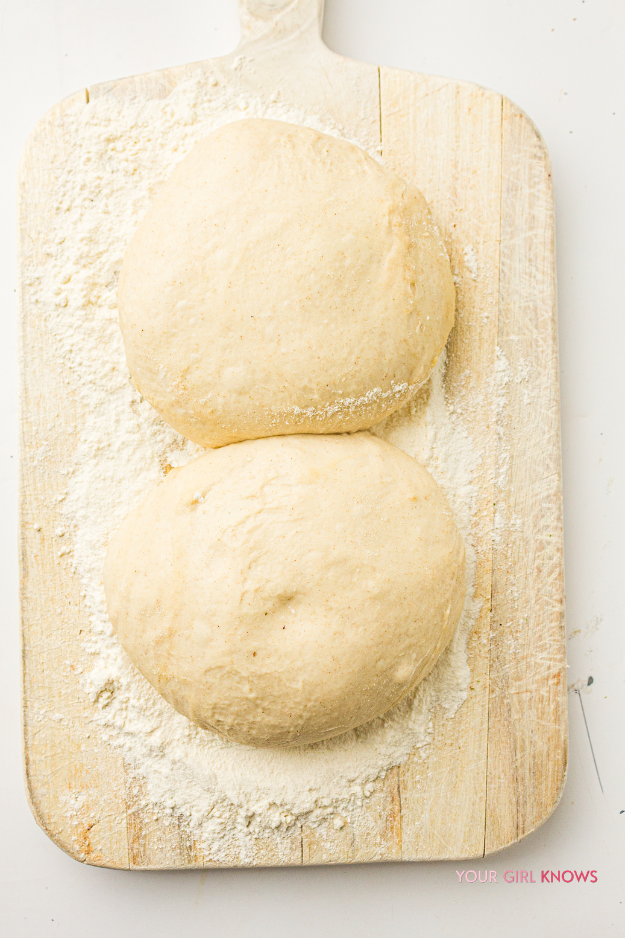
Turn the risen dough onto a lightly floured surface and divide into two equal portions. Shape each piece into a smooth ball and let them rest uncovered for 30 minutes. This rest relaxes the gluten after all the handling and is what makes the dough stretchable. Without it, the dough snaps back every time you try to stretch it.
Step 5: Preheat the Oven
Preheat your oven to its maximum temperature — 475–500°F (245–260°C). If using a pizza stone or baking steel, place it in the oven now and let it preheat for at least 45–60 minutes. A screaming hot surface is what creates the crisp, blistered bottom of a good pizza crust.
Step 6: Shape the Pizza
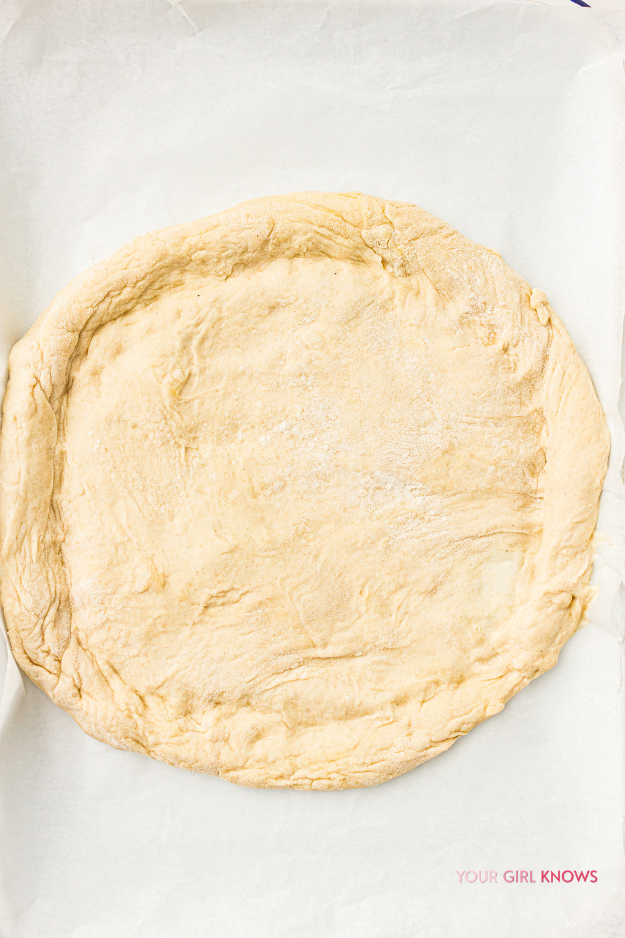
On a lightly floured surface, gently stretch each dough ball into a pizza round. Work from the center outward, using your hands rather than a rolling pin — a rolling pin presses out all the air bubbles that make the crust light and chewy. The edges should be slightly thicker than the center. Aim for roughly 10–12 inches across.
Step 7: Add Toppings and Bake
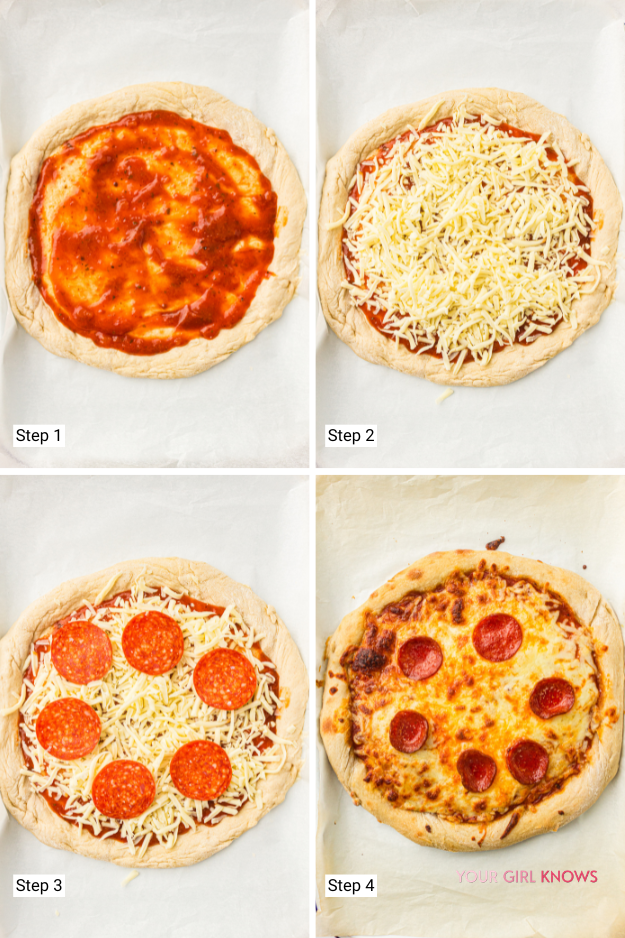
Transfer the shaped dough to parchment paper or a floured pizza peel. Add sauce, cheese, and toppings — keep it moderate. Overloaded pizzas don’t cook properly and the crust gets soggy from excess moisture.
Slide the pizza onto the preheated stone or steel, or onto a hot baking sheet. Bake for 10–15 minutes until the crust is golden with charred, crisp edges and the cheese is bubbling and lightly browned.
Step 8: Finish and Serve
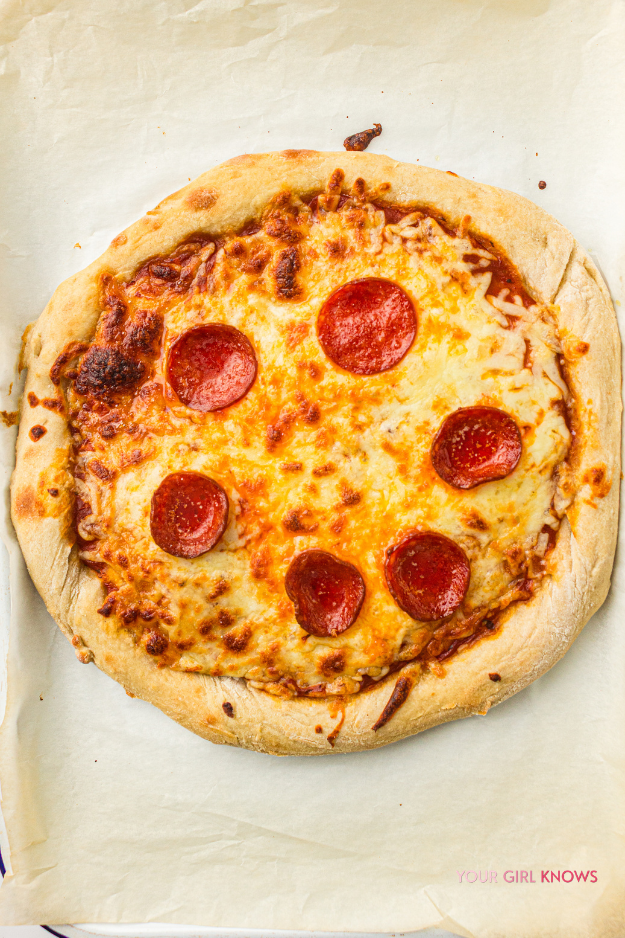
Remove from the oven and brush the crust edges with olive oil or garlic butter while still hot. Slice and serve immediately.
Pro Tips
Use a fully active, peaked starter. Pizza dough needs proper leavening to develop a good crust. Feed your starter 4–8 hours before making the dough and use it when it’s bubbly, doubled, and domed — not before, not after the peak.
Overnight fermentation is worth it. A same-day dough is good. An overnight dough is exceptional. The cold fermentation develops sugars, flavor compounds, and a more extensible, easier-to-shape dough. Plan ahead whenever you can.
Let the dough rest before stretching. If the dough keeps snapping back when you try to stretch it, it needs more time to relax. Walk away for 10–15 minutes and come back — it will stretch easily.
Never use a rolling pin. Stretching by hand preserves the air pockets in the dough. A rolling pin compresses them and gives you a flat, dense crust rather than a light, blistered one.
Preheat your stone or steel for at least an hour. The surface needs to be genuinely screaming hot for the bottom of the crust to cook properly. Most ovens take longer than you’d think to get a stone to full temperature. Plan for a full hour of preheating.
Don’t overload with toppings. Less is more on a pizza. Heavy toppings weigh the crust down, release moisture, and prevent the base from getting crispy. A thin layer of sauce, a modest amount of cheese, and a few well-chosen toppings is always better than a pile.

Sourdough Pizza
Chewy, blistered sourdough pizza crust with crispy edges and a depth of flavor that only slow fermentation can create — the pizza dough you'll make every time from here on out.
Ingredients
- 1 cup active sourdough starter (240g), bubbly and doubled
- ¾ cup warm water (180g)
- 2 tablespoons olive oil
- 1 teaspoon honey (optional)
- 3 cups bread flour (375g)
- 1½ teaspoons fine sea salt
Instructions
- Combine starter, water, olive oil, and honey. Add flour and salt and mix into a rough dough.
- Knead 8–10 minutes until smooth and elastic. Place in an oiled bowl, cover, and rise 4–6 hours. For best flavor, refrigerate overnight.
- Divide into two balls. Rest 30 minutes before shaping.
- Preheat oven to 475–500°F with pizza stone or steel inside for at least 45–60 minutes.
- Stretch each dough ball by hand into a pizza round. Transfer to parchment or a peel.
- Add sauce, cheese, and toppings. Bake 10–15 minutes until crust is golden and cheese is bubbling.
- Brush crust edges with olive oil or garlic butter. Slice and serve immediately.
Notes
Variations & Customizations
- Classic Margherita — Crushed tomatoes, fresh mozzarella, and fresh basil added after baking. The simplest version and often the best.
- White pizza — Skip the tomato sauce. Brush the dough with olive oil and garlic, layer with ricotta and mozzarella, and bake. Top with arugula after it comes out of the oven.
- BBQ chicken pizza — Swap the tomato sauce for barbecue sauce, top with shredded rotisserie chicken, red onion, and mozzarella.
- Mediterranean — Top with crushed tomatoes, olives, roasted red peppers, and crumbled feta. Finish with fresh oregano.
- Focaccia-style — Instead of stretching thin, press the dough into an oiled sheet pan and dimple deeply with your fingers. Let it rest 20–30 minutes, drizzle generously with olive oil, scatter with flaky salt and rosemary, and bake at 450°F for 20–25 minutes.
- Extra garlic crust — Mix 1 teaspoon of garlic powder directly into the dough with the flour. Brush the baked edges with garlic butter right out of the oven.
Storage
| Method | Details |
|---|---|
| Dough (fridge) | Store unused dough balls in an airtight container in the refrigerator for up to 3 days. The flavor improves with time. Bring to room temperature before stretching. |
| Dough (freezer) | Freeze individual dough balls in a lightly oiled zip-lock bag for up to 2 months. Thaw overnight in the refrigerator and bring to room temperature before shaping. |
| Baked pizza (fridge) | Store leftover baked pizza in an airtight container for up to 3 days. |
| Reheating pizza | Reheat in a hot skillet on the stovetop with a lid for 3–4 minutes — this crisps the bottom while melting the cheese on top. Much better than the microwave. Alternatively, reheat in a 400°F oven for 5–8 minutes. |
Frequently Asked Questions
Can I use discard instead of active starter?
Yes, but the dough will rise more slowly and may not develop as much structure. Extend the fermentation time significantly — up to 12 hours at room temperature — and expect a slightly denser, less airy crust. For best results, active peaked starter is the right tool for this recipe.
Why does my dough keep shrinking when I try to stretch it?
The gluten is tight and hasn’t relaxed enough. Set the dough down, walk away for 10–15 minutes, and try again. After resting, it should stretch without resistance. Trying to force a tense dough only makes it tighter and risks tearing it.
Can I make the dough ahead of time?
Yes — and you should. An overnight cold fermentation in the fridge dramatically improves the flavor and workability of the dough. Make it the night before, refrigerate, and take it out 1–2 hours before you want to shape it so it warms up and becomes pliable.
What’s the best setup for a crispy crust without a pizza stone?
Preheat a heavy baking sheet upside-down in the oven at maximum temperature for at least 30 minutes. Slide the pizza directly onto the hot inverted sheet. It won’t be quite as good as a stone or steel, but it gets much closer than a cold baking sheet would.
How thin should I stretch the dough?
Aim for about ¼ inch thick across the center, slightly thicker at the edges. Thinner than that and the crust can burn or crisp through too quickly before the toppings cook. Thicker and you lose the blistered, chewy quality that makes sourdough pizza special.
related articles to sourdough pizza dough
- Sourdough Discard Crackers That Turn Leftover Starter Into Something Seriously Addictive
- Sourdough Discard Waffles That Turn Leftover Starter Into the Best Breakfast of the Week
- Soft & Chewy Sourdough Chocolate Chip Cookies Using Sourdough Discard
- These Sourdough Discard Pancakes Are Light, Tangy, and Seriously Hard to Mess Up